
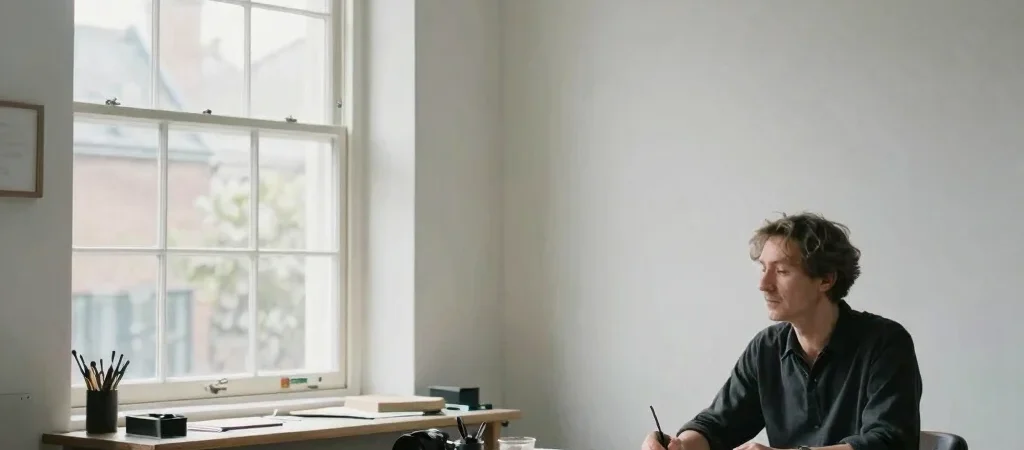
A photograph and a video frame may come from the same visit, but they do different jobs. A film gathers moments over time; a still has to make its meaning felt in one glance. Treating the photograph as its own piece of work leads to better choices than simply asking which frame is sharpest.
Look beyond the obvious moment
The central action is not always the strongest photograph. A person preparing a room, waiting for someone to arrive or clearing a work surface can reveal as much as the moment everyone expected the camera to capture. I look for gestures that say something about the subject without making them perform for the lens.
It helps to give a scene a little time. As a subject settles, shoulders drop and hands return to familiar tasks; the picture often becomes more natural. I keep enough distance for the person to continue their work, then pay attention to what enters the edges of the frame.
Use the available light
Window light can change noticeably across a room, even over a short visit. Turning a chair slightly or shifting position by a step may soften a bright patch on a face while keeping the space recognisable. Rather than forcing every scene into the same look, I try to respond to the light that is already there.
The background deserves the same attention as the subject. A bright doorway or a stack of objects can compete with a quiet expression, while a plain wall may remove useful context. Before making the photograph, I check the corners and decide what the frame should leave out.
Let stills add context
When photography sits alongside a film, consistency does not mean making every image identical. A wider photograph might establish a place while the moving piece stays close to a conversation. The two forms can share a sensitivity to light and colour without repeating the same composition.
That difference is useful when choosing work for a portfolio: the stills should show what a moving sequence cannot hold in one glance. Before pressing the shutter, I ask what this particular image adds. If the answer is only that it records the same moment, I keep looking.