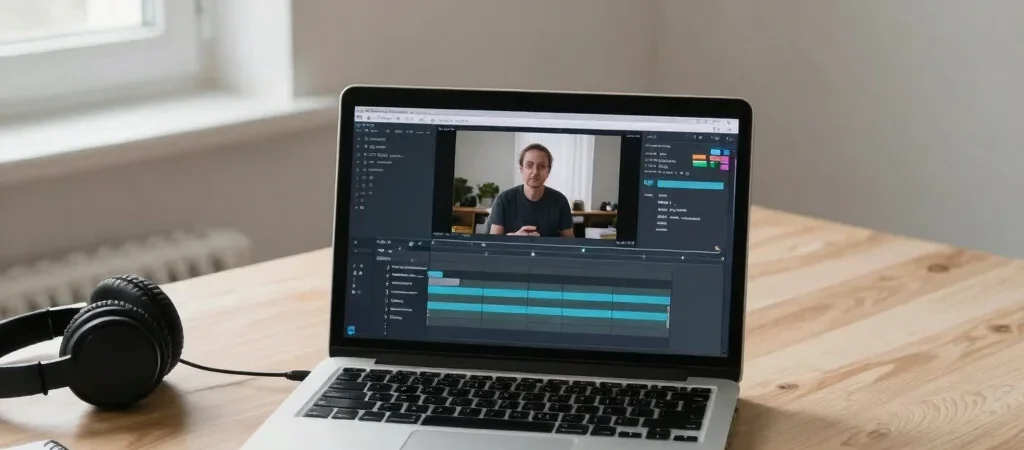
On location, it is easy to concentrate on the shot in front of the camera. Later, when the footage is laid out in the edit, the story may turn on something quieter: a breath before an answer, a hand returning to its work, or the room tone between two scenes. Those details are a good reason not to decide too early what a finished film must be.
Start by watching without cutting
A first pass through the footage is for noticing, not polishing. I look for repeated gestures, changes in energy and moments that feel connected even if they were filmed apart. Writing down timecodes as I go makes it easier to find those moments again without interrupting the first impression.
This is also when I check what the material can honestly support. If an interview answer needs a question to make sense, or a scene depends on a shot that was never captured, no amount of fast cutting will fix the gap. The edit should work with what happened, not pretend the camera saw everything.
Let sound carry a little
Natural sound can make a cut feel less abrupt and give a place its own texture. The clatter of a workshop, traffic outside a doorway or the soft shift of fabric may help one image lead into another. I listen to these sounds on their own before deciding whether music is needed.
Music has its place, but it can flatten the differences between moments if it arrives too soon. Leaving a little space around dialogue and everyday sound often gives the viewer more room to pay attention. The quieter choice is not always the weaker one.
Keep the frame in mind
A film is made from moving images, but individual frames still matter. I check the sequence at full screen for distracting edges, changes in light and the small visual details that can pull attention away from a speaker. When a still photograph is part of the same project, it can offer another way to notice those details without asking the film to stop.
A useful edit does not simply make footage shorter; it makes the choices behind the frame easier to feel. Before calling a cut finished, I watch it once without stopping and ask whether each moment earns its place. If the answer is unclear, I go back to the material.